FabTrack - Wafer Defect Tracker
Full-stack .NET + Angular app for tracking silicon-wafer defects. Plots defects on the wafer surface by location and severity, with a charted dashboard. Built to demonstrate ASP.NET Core + Angular.
Full-stack .NET + Angular app for tracking silicon-wafer defects. Plots defects on the wafer surface by location and severity, with a charted dashboard. Built to demonstrate ASP.NET Core + Angular.
Project Overview
FabTrack is a photolithography wafer & defect tracker built as a focused, end-to-end demo of an ASP.NET Core Web API + Angular stack. Engineers log silicon wafers moving through the chip-patterning line, record defects found on each, and view line health on a dashboard.
The backend is an ASP.NET Core Web API (.NET 10) with C#, using Entity Framework Core over SQLite with code-first migrations. It exposes REST CRUD for wafers and defects (one-to-many with cascade delete), a filterable defects endpoint, and a server-side aggregation endpoint for the dashboard. The database auto-migrates and seeds reproducible demo data on first run, so a fresh clone runs with one command. Swagger/OpenAPI documents the API.
The frontend is Angular (standalone components, TypeScript) with Angular Material and Chart.js. The standout feature is a visual defect map: each defect is plotted on the wafer surface by its X/Y location and colored by severity. The dashboard renders stat cards plus charts (defects by type, defects by severity) fed by the aggregation endpoint.
This is a focused learning/proof project rather than a large platform — built to demonstrate C# / .NET and Angular competence end to end. Auth, a NoSQL store, and containerized deploy are scoped as deferred next steps.
Key Features
- •REST CRUD for wafers and defects via ASP.NET Core Web API
- •Visual defect map - each defect plotted on the wafer surface by X/Y location, colored by severity
- •Charted dashboard (defects by type, by severity) fed by a server-side aggregation endpoint
- •Filterable defects view (by type and minimum severity)
- •EF Core + SQLite with code-first migrations; one-to-many with cascade delete
- •Auto-migrate and reproducible seed data on first run
- •Swagger / OpenAPI documentation
- •Angular standalone components with Angular Material and Chart.js
Project Gallery
Technical Challenges & Solutions
Challenge 1
Letting the Angular dev server call the API without HTTPS certificate friction
Solution
Configured a named CORS policy in the API allowing the Angular origin (localhost:4200), and intentionally omitted HTTPS redirection in development so the browser can hit the plain-http endpoint without a trusted dev certificate.
Challenge 2
Making a fresh clone run instantly with non-empty, consistent data
Solution
On startup the API applies EF Core migrations (creating the SQLite file if needed) then seeds ~10 wafers and ~30 defects behind an idempotent guard, using a fixed RNG seed so the demo data is identical on every machine - useful for reproducible screenshots.
Results & Impact
End-to-end ASP.NET Core Web API + Angular app with a working REST + EF Core backend
Visual defect map plotting defects on the wafer surface by location and severity
One-command run from a fresh clone via auto-migrate and seed
Technologies Used
Project Links
Interested in this project?
Let's discuss how I can help with your similar requirements.
Get in TouchSimilar Projects

LocalOS - On-Device AI for Your Obsidian Vault
React Native app for on-device LLM inference - no cloud, no API keys. Chat with a local AI that reads, semantically searches, and writes your Obsidian vault. Three inference backends, on-device embeddings, voice input. Work in progress.

AutoPartsDB - Inventory Management System
Inventory management system that transformed a monolithic Excel file with 900+ columns into a relational database. Features relationship visualization for parts-suppliers-clients, work table sync functionality, and automatic backups.
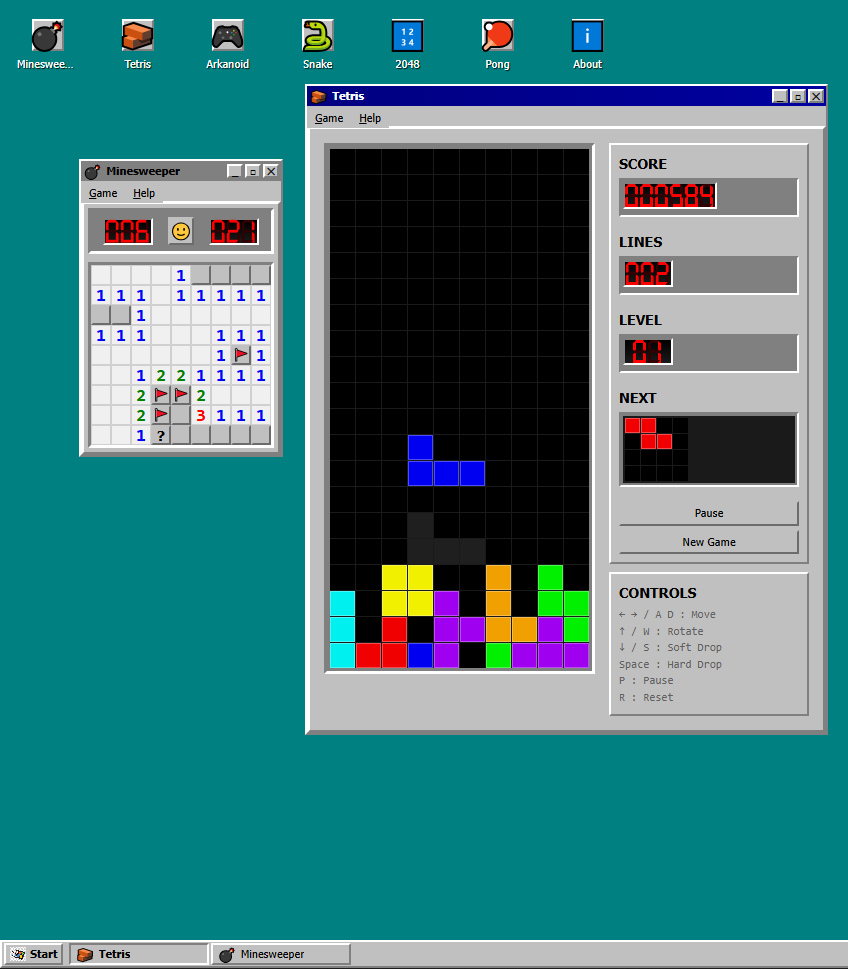
Win95Games - Retro Gaming Platform
Collection of 6 classic Windows 95 games with authentic retro desktop experience. Features Minesweeper, Tetris, Arkanoid, Snake, 2048, and Pong in a pixel-perfect Windows 95 UI with window management and smooth animations.